

Supreme Court Narrows Active Inducement Claims in Vascepa Generic Drug Decision
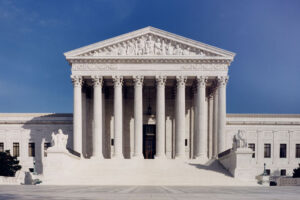
In the long-standing litigation between Hikma Pharmaceuticals USA Inc. and Amarin Pharma, Inc., the Supreme Court unanimously held that “Amarin failed to state a claim for active inducement, so its complaint cannot withstand Hikma’s motion to dismiss.”
This Supreme Court opinion reversed the Federal Circuit’s 2024 judgment, which was primarily related to issues surrounding Hikma’s promotional activity in connection with its Section viii “skinny label” carve-out under the Hatch-Waxman Act. Specifically, the Supreme Court stated that the key issue was not whether physicians could interpret Hikma’s statements as instructions to infringe, but whether Amarin plausibly alleged that Hikma actively encouraged infringing use.
Key Takeaways
- The Supreme Court unanimously ruled in Hikma’s favor.
- Active inducement requires affirmative encouragement, not merely foreseeable use.
- FDA-approved skinny labels remain an important pathway for generic drug approval.
- Pharmaceutical companies should carefully evaluate promotional statements and materials following the decision.
Regulatory and Litigation Background
In 2012, Amarin received approval from the U.S. Food and Drug Administration to market Vascepa (icosapent ethyl) for the treatment of severe hypertriglyceridemia (“SH”). In 2019, FDA approved Vascepa for a second indication, to reduce the risk of cardiovascular events in patients taking statins.
Hikma submitted an abbreviated new drug application (“ANDA”) for icosapent ethyl in 2016 and filed paragraph IV certifications challenging Amarin’s patents directed at treating SH. After the SH Patents were invalidated at the District Court (and affirmed by the Federal Circuit), Hikma supplemented its ANDA to include a section viii statement, seeking approval for a “skinny label” limited to the SH indication, while carving out Vascepa’s cardiovascular indication.
FDA approved Hikma’s skinny label and granted Hikma an “AB” rating in 2020. Amarin then filed a lawsuit in the District of Delaware alleging that Hikma actively induced others to infringe Amarin’s cardiovascular indication patents through statements Hikma included on the drug label, patient information, Hikma’s website, and press releases. The District Court granted Hikma’s motion to dismiss the litigation for the failure of Amarin to state a claim. Amarin appealed this District Court decision. The Federal Circuit reversed the District Court’s decision, finding that it was at least plausible that a physician could read the relevant statements by Hikma as an instruction or encouragement to infringe the cardiovascular indication patents.
Legal Standard for Active Inducement
A claim for active inducement requires three elements:
- Direct infringement by a third party;
- Knowledge that “the induced acts constitute patent infringement;” and
- “Active steps … to encourage direct infringement.”
This case related to the third element, whether Hikma had taken affirmative steps to encourage infringement of Amarin’s cardiovascular indication patents.
Active inducement requires affirmative encouragement, not merely foreseeable use.
The Supreme Court’s Decision and Industry Response
Justice Jackson delivered the opinion for a unanimous Court, stating that “Amarin’s allegations, whether viewed together or separately, fail to establish that Hikma took any affirmative steps to encourage infringement.” The opinion stated that “inducement cannot be based only on ‘vague’ language ‘combined with speculation about how [others] may act.’”
The decision has prompted differing public reactions. Some attorneys have noted that generic companies “are breathing a sigh of relief today” and this decision “gives the generics a bit more freedom in terms of what they can say from a marketing perspective.” Conversely, representatives from the branded-drug industry note that the decision “could put the Hatch-Waxman Act’s careful balance at risk.”
What This Means for Patent Litigants
The Supreme Court’s decision in Hikma v. Amarin provides important guidance on induced infringement, Section viii carve-outs, and the evidentiary standard required to support active inducement claims. As pharmaceutical patent litigation continues to evolve, early evaluation of technical, regulatory, and damages issues can play a critical role in case strategy.
Whether representing branded or generic pharmaceutical companies, counsel should carefully assess how this decision may influence litigation risk, expert analysis, and future enforcement strategies.
Speak With Our Intellectual Property Experts
Whether evaluating litigation strategy, damages, or expert testimony needs, our professionals can help assess how this ruling may affect your matter.
About Gleason & Associates
Gleason & Associates provides independent expert consulting services in commercial litigation, intellectual property, forensic accounting, economic damages, business valuation, bankruptcy, investigations, and regulatory matters. Our professionals work with law firms, corporations, and government agencies nationwide.
Need an expert?
✔ Financial Damages
✔ Intellectual Property & Patent Matters
✔ Forensic Accounting
✔ Business Valuation
✔ Expert Testimony